
1. Where the odour of dewatered sludge comes from
Operators all see it: sludge that hardly smelled at the centrifuge outlet becomes distinctly odorous one to a few days later, in the skip, the silo or the storage shed. This delay is the signature of an odour that is not “brought” by the sludge but produced in the cake after dewatering.
This mechanism was described in detail by a North American research programme covering eleven plants equipped with anaerobic digesters (see references). Its conclusions come down to three points:
- The source is protein. The main odorous compounds of the cake are volatile sulphur compounds — hydrogen sulphide, methyl mercaptan, dimethyl sulphide and dimethyl disulphide — produced by the biodegradation of the sludge proteins, and in particular of their sulphur-containing amino acids. The same breakdown releases nitrogen as ammonia and amines.
- The trigger is mechanical. The shear applied in the centrifuge, the screws and the cake pumps makes available proteins that were until then protected inside the flocs. The bacteria that break them down grow quickly, whereas the micro-organisms able to consume the sulphur compounds formed are slowed down by dewatering.
- Emission follows a curve. In the eleven cakes studied, the production of volatile sulphur compounds peaks between 3 and 8 days of storage, then declines. Anaerobic digestion therefore does not remove the odour potential of the sludge: it leaves it intact until dewatering.
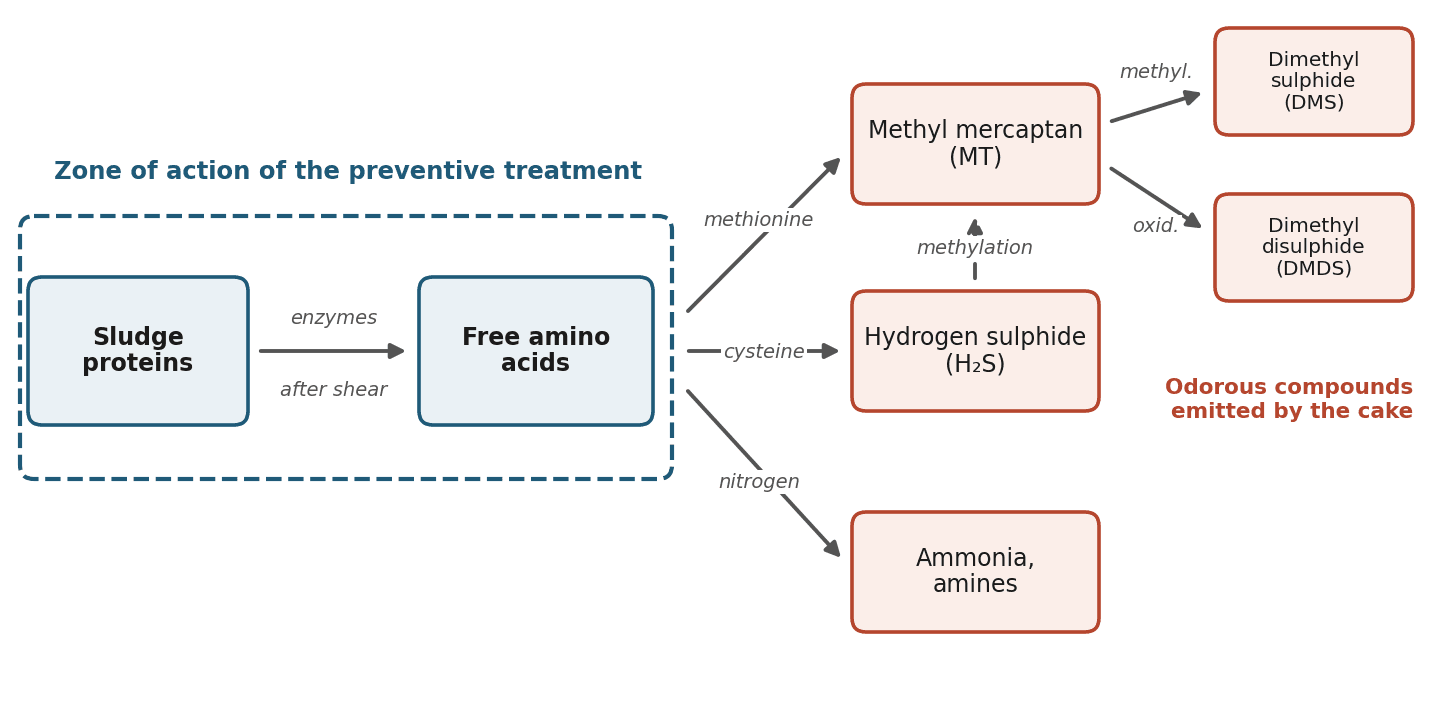
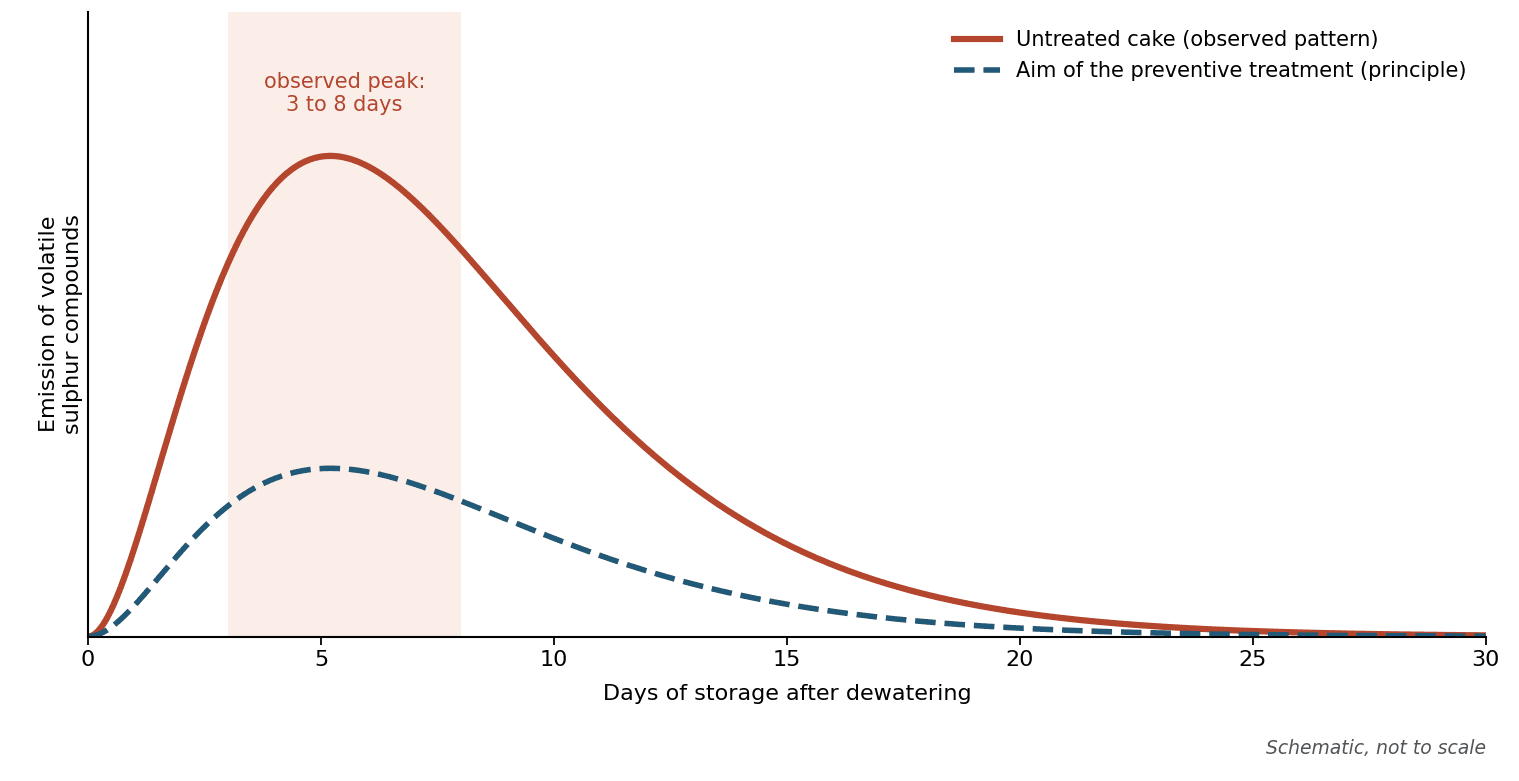
Two practical consequences. First, it is recent sludge that emits: the top of the pile, the day's skip, and every pass of the loader that exposes fresh material to the air. Second, reagents intended for mineral sulphide — iron salts, nitrates — do not interrupt this pathway: a plant can have its biogas or its sewer network fully under control and still have a sludge shed that bothers the neighbours.
2. The principle of Enviro-Chem Cx: prevent rather than capture
Enviro-Chem Cx is an acidic aqueous formulation of organic and mineral actives, fully miscible with water. It is neither a masking agent, nor an oxidant, nor a biocide. Its action is preventive: it binds to protein matter as it becomes accessible and slows the work of the enzymes that release its sulphur and nitrogen. This is referred to as temporary stabilisation of the biomass.
Temporary, because the organic matter is neither destroyed nor made refractory: the sludge keeps its agronomic value and remains compatible with the usual outlets, land application and composting. The aim is to flatten the emission peak of the first days, that is, the period during which the sludge is conveyed, stored, loaded and transported.
The product has been marketed for more than twenty years in municipal and industrial wastewater treatment (breweries, pharmaceuticals, food industry). The same formulation is used in anaerobic digestion under the name Enviro-Chem METHA.
3. Why the polymer is the right injection point
All mechanical dewatering — centrifuge, belt filter press, filter press — relies on a cationic polymer preparation unit. Adding Cx there combines four advantages that no other point of the sludge line offers together:
- The right moment. The product reaches the sludge just before the shear that releases the proteins.
- The right mixing. The polymer solution is injected in-line and intimately mixed with all of the sludge. The product benefits from this distribution, which cannot be achieved by spraying onto a cake that has already formed.
- No heavy equipment. A small dosing pump and a drum placed next to the preparation unit are enough. Nothing is modified on the line.
- A dose that can be calculated. The dry solids produced are known; the dose follows directly.
4. Implementation
| Parameter | Recommendation |
|---|---|
| Injection point | Polymer preparation tank, in a stirred compartment where the polymer is already dissolved (maturation or mixing tank). Failing that, in-line into the polymer solution. |
| Reference dose | 1 litre of Cx per tonne of dewatered dry solids, to be adjusted according to the sludge and the result. |
| Equipment | Dosing pump set to the average flow (continuous preparation) or fixed volume per batch (batch preparation). Drum or IBC at the foot of the preparation unit. |
| Compatibility | Cationic polymers (polyacrylamides) are stable in acidic conditions; at the dose used, the product represents only a few hundredths of a per cent of the polymer solution. |
| Safety monitoring | Cake dry solids content and polymer consumption, monitored as usual. At this dose, we have never observed any effect on dewatering. |
5. A versatile product: every stage, every family of odours
Along the whole sludge line
The dewatering polymer is the simplest entry point, but it is not the only one. Because it acts on the material and not on the air, the same product applies at every stage where the sludge is held, and its effect travels with the sludge downstream, where no air treatment follows it.
| Stage | Nuisance | Application of Cx |
|---|---|---|
| Thickening, liquid sludge tanks and holding tanks | Odours on opening, mixing and tanker unloading | Dosing into the sludge, at the tank inlet or on the recirculation line |
| Anaerobic digestion | H₂S in the biogas, activated carbon consumption | Dosing into the digester feed (same formulation, under the name Enviro-Chem METHA) |
| Dewatering | Odours from the dewatering room, the screws and the skips | Dosing into the polymer (chapters 3 and 4) |
| Cake storage: skip, silo, shed | Complaints from neighbours, especially during handling and loading | The sludge arrives already treated through the polymer; additional spraying possible during handling |
| Transport, composting, land application | Odours off site, where no equipment can follow | The sludge leaves the plant already treated |
| Solar drying in greenhouses | Odour releases towards the neighbourhood | Fresh sludge enters the greenhouse already treated through the polymer |
| Industrial sludge | Highly fermentable sludge: breweries, food industry, pharmaceuticals | Same application points as at a municipal plant |
Practical consequence: a plant with several odorous points along its sludge line does not need to multiply equipment or reagents. One product, one dosing pump per point, and an order of priority to be set with the operator, starting with the nuisance that causes the most trouble.
Across the different families of odours
The odour of sludge is never a single compound: it is a mixture of sulphur and nitrogen molecules, in proportions that change from one site to another and from one day to the next. Conventional treatments each target one family: iron salts bind only sulphide, an acid scrubber retains ammonia but not sulphur compounds, an oxidising scrubber or activated carbon does the opposite. Hence multi-stage installations. Cx acts before these families separate, on the breakdown of the proteins from which they all originate.
| Odour family | Origin in the sludge | Conventional treatment | With Cx |
|---|---|---|---|
| Hydrogen sulphide (rotten egg) | Sulphur-containing amino acids | Iron salts, caustic soda and bleach scrubbing | −99.9% (Certech test) |
| Mercaptans (rotten cabbage) | Methionine | Oxidising scrubber, activated carbon | −88% (Certech test) |
| Organic sulphides, DMS and DMDS (cabbage, garlic) | Mercaptan derivatives | Activated carbon | −64% and −26% (Certech test), by cascade effect |
| Ammonia and amines (pungent, fishy) | Protein nitrogen | Acid scrubber, biofilter | Same action upstream, on the release of nitrogen |
The Certech figures are those of the laboratory test detailed in chapter 7. Mineral sulphide (from sulphate reduction) is not concerned: see chapter 9.
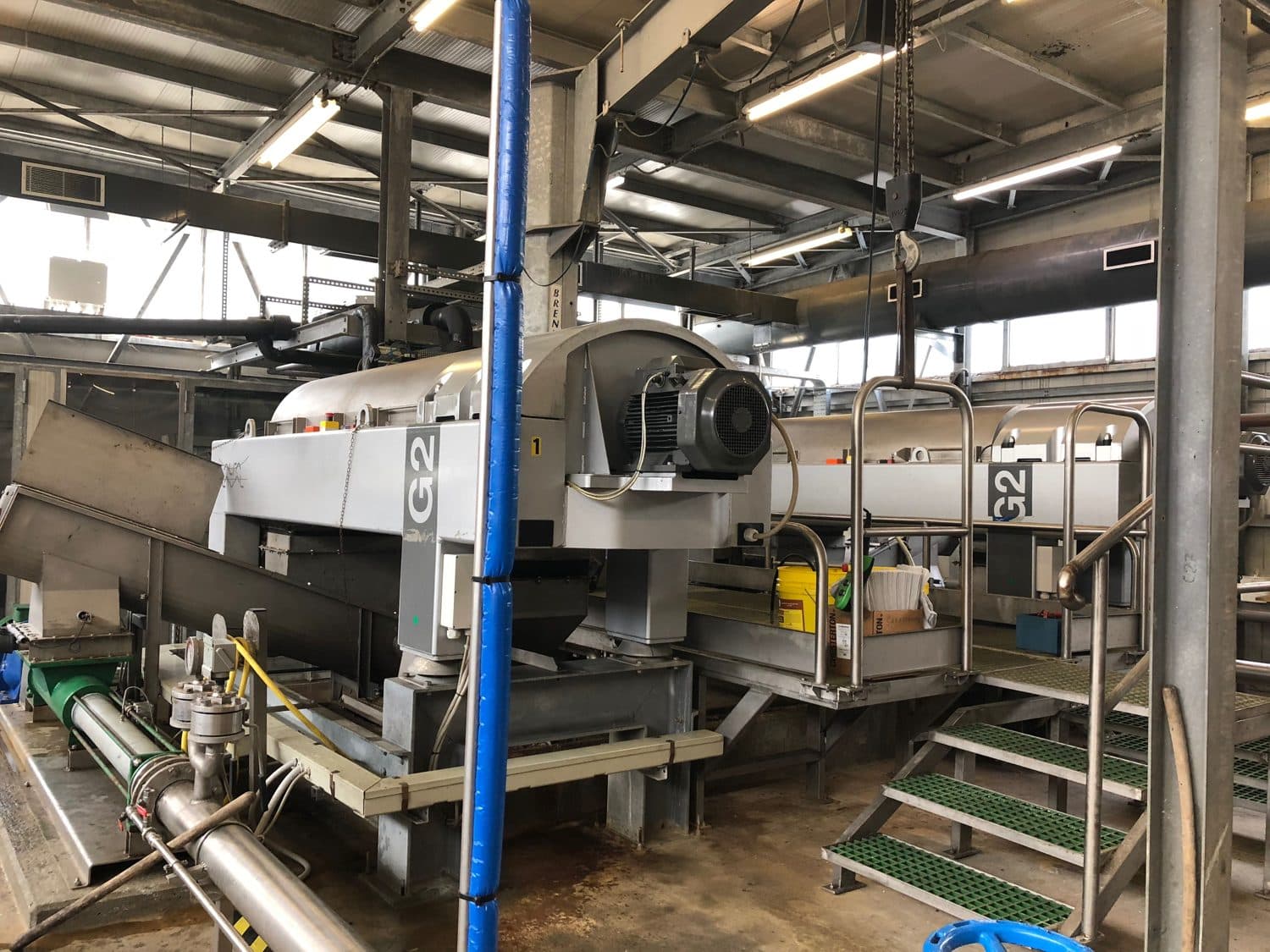
6. Illustration: the Comodepur plant (Como, Italy)
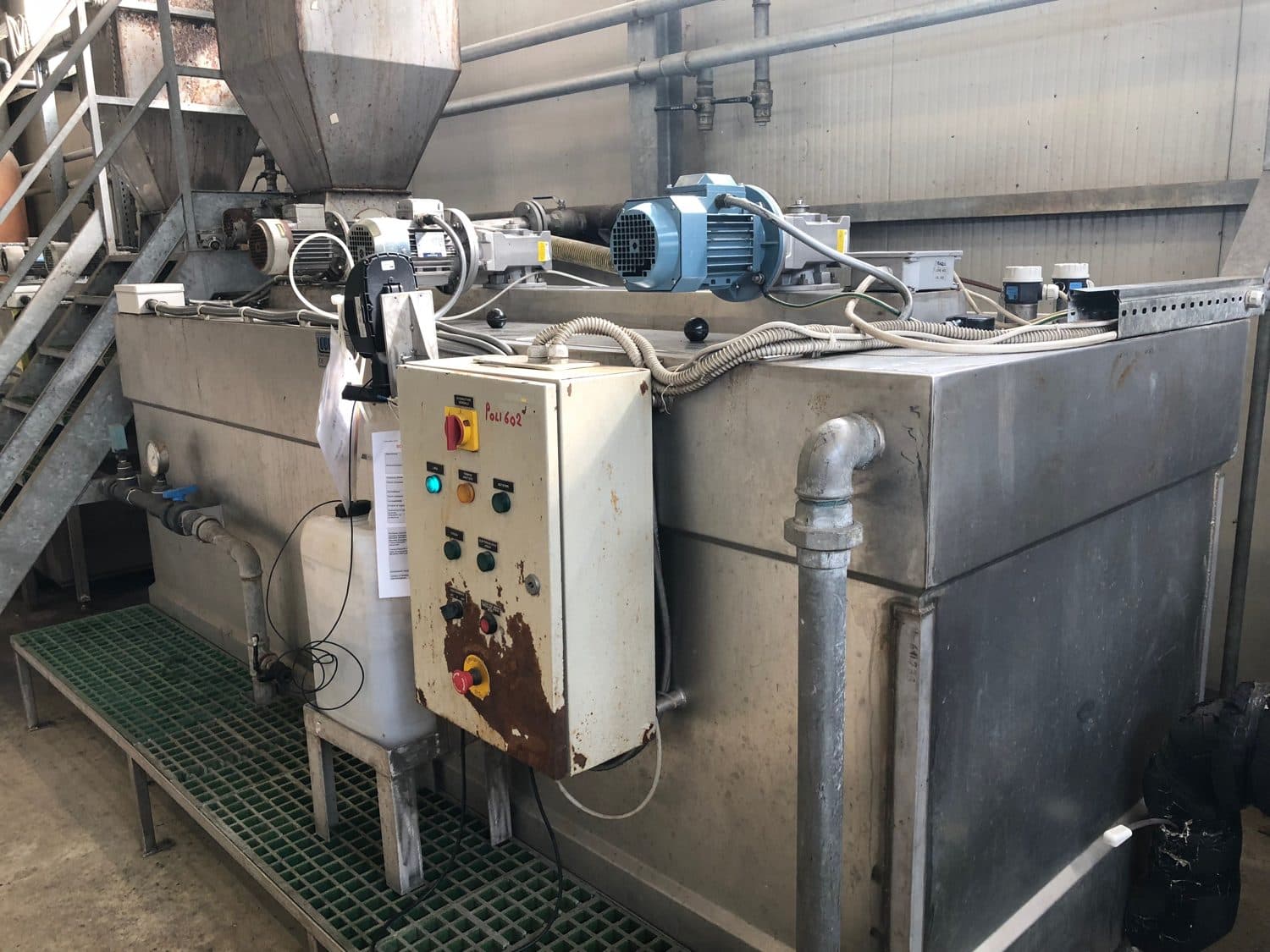
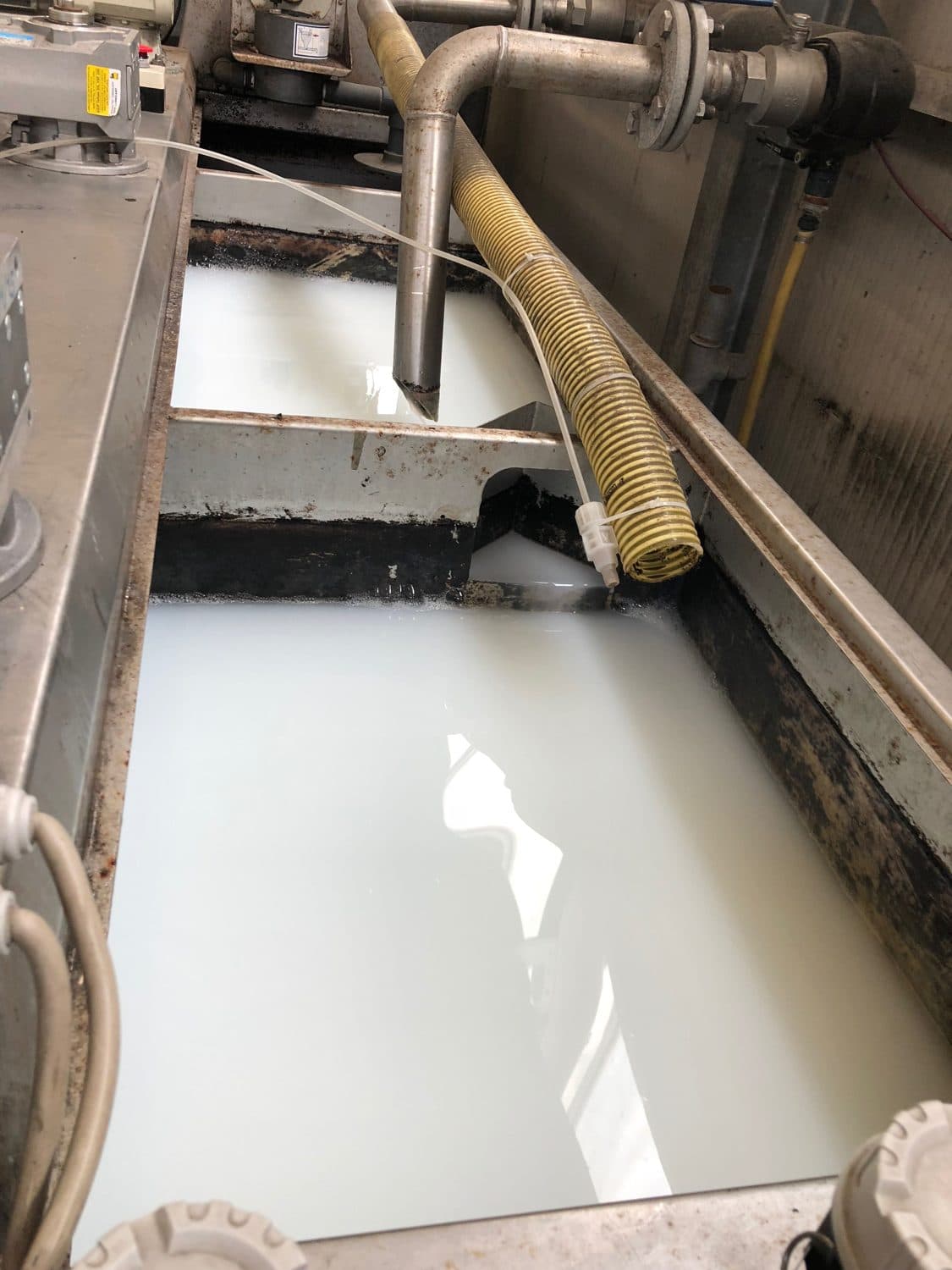
The Comodepur wastewater treatment plant in Como has implemented Enviro-Chem Cx by addition to the dewatering polymer. The photos below show the installation as carried out on site by our Italian distributor.
7. Supporting evidence
- Independent literature. The protein origin of cake odours, the role of shear and the shape of the emission curve are established by published work unrelated to the product (references below). They justify the choice of injection point and of target.
- Independent laboratory testing. A comparative test on treatment plant sludge, with a control, was carried out by the Certech research centre (Belgium); its results are detailed below. Certech also verified the absence of biological inhibition at the dose used.
- Field experience. More than twenty years of use in wastewater treatment; the oldest reference, the Córdoba plant (Spain), has used the product continuously since 2003.
The Certech comparative test (2013)
Certech, a laboratory approved by the Walloon Region for odour measurements, compared a treated drum and a control drum: 6-litre drums loaded with 2 litres of liquid sludge and 500 g of solid sludge from the same sample, vapours sampled through a septum and analysed by chromatography (GC-FPD) at eleven time points over 360 hours.
| Compound | Control | Treated | Difference |
|---|---|---|---|
| H₂S — free sulphide | 930.6 ppm | 0.3 ppm | −99.9% |
| Methyl mercaptan — free thiol | 147.6 ppm | 17.8 ppm | −88% |
| Dimethyl sulphide — thioether | 242.0 ppm | 87.6 ppm | −64% |
| Dimethyl disulphide | 14.6 ppm | 10.8 ppm | −26% |
Values at the control maximum, compared with the treated drum at the same time. Source: Certech report 13/521, available in full on request.
During the first three days, the two curves coincide: hydrolysis has not started, there is nothing to prevent. From the sixth day, the control takes off and the treated drum never follows it. This profile is that of slowed production, not of trapping that would eventually have saturated. The test is run in a closed reactor, at a laboratory concentration higher than operating doses: it establishes the mechanism and its kinetics, it does not set a field dosage.
8. Proposed on-site trial
A trial is set up in half a day and assessed within a few weeks. The scheme we propose:
- Baseline — 1 week. Measurements without product, at the same point and under the same conditions as the following phases (for example during loading).
- Dosing — 4 weeks. Cx in the polymer at 1 L/t DS, cake dry solids monitored as usual.
- Stop — 2 weeks. The stop serves as a cross-check: if the odour returns with the untreated sludge, the result cannot be attributed to the weather.
Measurements must cover ammonia as much as hydrogen sulphide: an H₂S detector alone can miss the main part. A portable detector used at the same place and at the same time is sufficient; the opinion of neighbours and staff also counts.
For sizing, three figures are enough: the tonnage of dewatered sludge and its dry solids content, the polymer consumption, and the preparation mode (continuous or batch).
9. Scope of validity
The product acts on protein-derived odours: organic sulphur compounds, ammonia and amines resulting from the breakdown of the sludge. It does not treat mineral sulphide (from sulphate reduction), which is a matter for iron salts, and it does not capture, at the dose used, compounds already present in the air. On sludge that has been stored for several months and has finished emitting, there is nothing left to prevent: it is the sludge produced during the treatment that benefits.
References
- Higgins M.J. et al. (2006). Cycling of volatile organic sulfur compounds in anaerobically digested biosolids and its implications for odors. Water Environment Research, 78(3), 243-252.
- Novak J.T. et al. (2006). Generation pattern of sulfur containing gases from anaerobically digested sludge cakes. Water Environment Research, 78.
- Higgins M.J. et al. (2008). Role of protein, amino acids, and enzyme activity on odor production from anaerobically digested and dewatered biosolids. Water Environment Research, 80.
Contact: Yves Goldblatt — SARGO s.a., Brussels — +32 475 70 88 66